The Psycheverse— Psychology and the Bible. Why?
My central claim is this: you cannot truly grasp spirituality without first going inward.
And because of this, we are in trouble.
Christianity is in trouble.
Yes, the Bible remains. But it is often over-rationalized. And we don’t need more of that. Our very apparatus for sensing the true meaning of Scripture is clouded by our own unconscious assumptions.
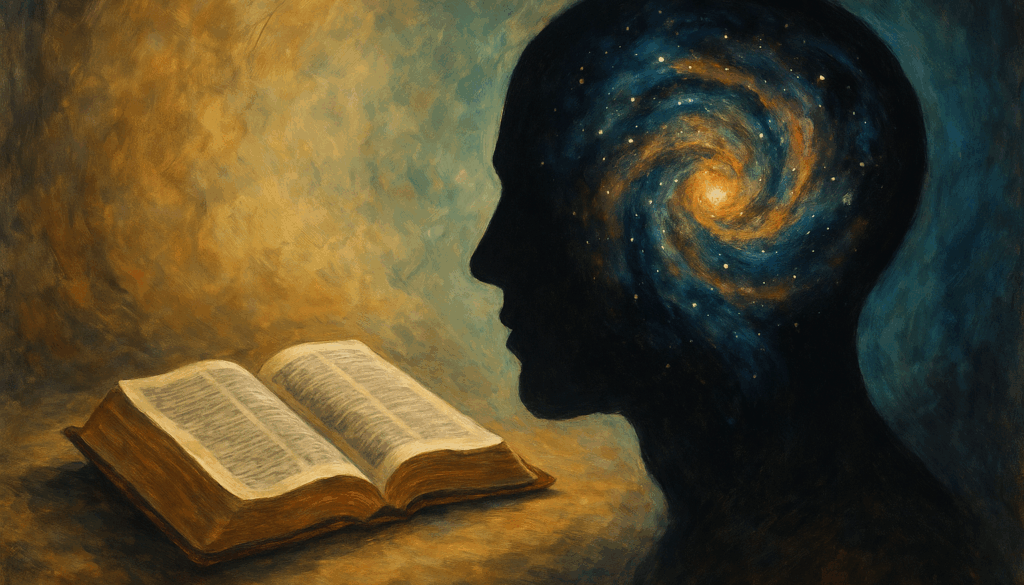
I believe that in today’s world, a basic understanding of the psyche is essential—even just to find yourself. The ancient spiritual maps have faded. What remains is the wild, uncharted terrain within: the human soul.
If you’ve never gone inward, you’ll likely turn back the moment you begin. Why? Because it’s unfamiliar. It’s dark, even frightening. I’m talking about the unconscious—the shadow. A Jungian term, yes, but it names something deeply biblical: the hidden parts of ourselves we’d rather not face, yet must.
This inner descent is the beginning of all real transformation. And many modern frameworks—both therapeutic and spiritual—can guide us:
-
Cognitive-behavioral models help us challenge the beliefs and automatic thoughts that quietly shape our lives.
-
Mindfulness teaches us to notice, rather than flee, our moment-to-moment experience.
-
Self-compassion offers love where we once applied shame.
-
The person-centred model (Carl Rogers) invites us to live with greater congruence and freedom.
-
Psychodynamic theories reveal the split between our conscious and unconscious lives—an essential divide to bridge.
-
Jungian psychology teaches that healing is integration: life as a jigsaw puzzle where every piece belongs.
-
Internal Family Systems (IFS) echoes this: every part of us is needed. None are disqualified.
-
Somatic therapies and yoga remind us that healing must include the body. If you don’t feel safe in your own body, you can’t move forward.
-
Trauma-informed approaches reveal how we carry inherited wounds. It’s not your fault—but it is your task to heal.
-
Coaching underscores this responsibility. No one else will do the inner work for you.
-
Joseph Campbell’s Hero’s Journey outlines the great mythic path: descent into darkness, discovery of self, return with wisdom.
-
Transpersonal approaches affirm that when we move through the dark, we are often met by the light—peak states, mystical encounters, divine presence.
There is a pattern here. The pattern. The one that underlies every true transformation.
But this pattern was buried. First by dogmatized religion, then by the Enlightenment, where reason became the new god. Nietzsche saw it when he wrote, “God is dead.” Not that God died—but our image of Him did. And with it, our connection to myth, to the unconscious, to the soul’s symbolic language—the very place where God speaks.
And now, in the 21st century, we’re lost—because we’ve forgotten the way home.
My Journey, Your Journey
So I began formal psychotherapy study. I’ve been reading, reflecting, connecting dots, and drawing from multiple disciplines.
This site is a coalition of that research. It dives deep—into theology, myth, trauma, shadow, spirit—but I aim to make those depths accessible, grounded, and human.
This site is not religious. I believe that is important because we don’t need more religions as we have them today. We need soul.
Please use what you learn here to better yourself, understand psychology and the Bible more deeply, and better whatever community you’re a part of.
Welcome to The Psycheverse. I’m glad you’re here. Scroll through the latest posts, explore a topic that stirs something in you—and most of all, keep asking real questions.