Build on the Rock, Not the Sand: Digging Down into the Soul
“And the rain fell, and the floods came, and the winds blew and beat on that house, but it did not fall, because it had been founded on the rock.” – Matthew 7:25
A Storm on the Threshold
Picture a house clinging to the edge of a cliff as winter roars in off the sea. The windows tremble. Waves rise like ancient questions. And in the hush before the gale, everything appears solid—until the storm tells the truth.
This parable, Jesus’ closing image in the Sermon on the Mount (Matthew 7:24–27), is more than moral advice. It is a psychological and spiritual x-ray. On the surface, two lives may look the same. But the storm exposes what was buried—what was trusted—what held.
1. Two Houses, One Storm
“The wise and the foolish man were both engaged in precisely the same avocations… Both undertook to build houses… both finished their houses. The likeness between them is very considerable.” – C. H. Spurgeon¹
This is the haunting detail. They both built. They both finished. On the surface, they both succeeded. One just happened to be standing after the flood.
2. The Overlooked Depth
Biblical scholar A. B. Bruce reminds us that Jesus doesn’t speak of a single stone but “a rocky foundation.” Not a rock as in a boulder, but a bedrock—a deep, connected layer. And the second builder’s mistake? Not rebellion. Not even poor judgment. Simply not thinking about the foundation at all.
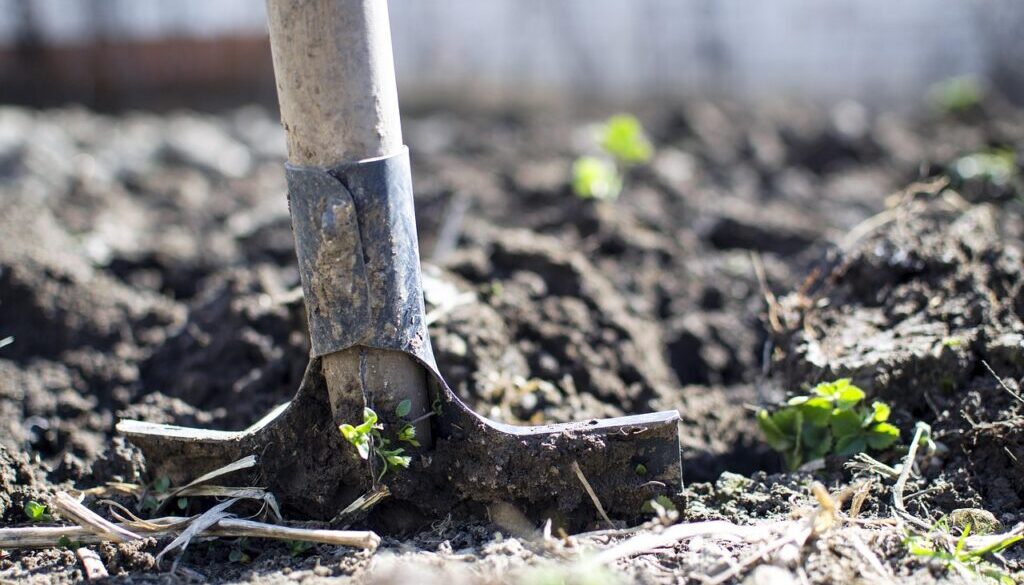
He did not choose sand on purpose. He just didn’t dig.
3. When Action Isn’t Enough
“Merely hearing God’s word isn’t enough; we must be doers.” – David Guzik³
Yes, doing matters. But not all doing is built on rock. Doing from guilt, fear, or religious performance is not obedience—it’s exhaustion in disguise. It’s busyness dressed as devotion, productivity masquerading as faith.
Productivity is not, in itself, solid. Movement doesn’t mean rootedness. Activity does not equal alignment.
“Our productivity preoccupies us and makes us feel important, while it leaves us empty and disconnected.” — Henri Nouwen
Eventually, you will question your doing. You’ll feel the tremor beneath your habits. And if you dig and find only sand—approval-seeking, shame-avoidance, hollow routine—your world will shift.
And it will be dreadful.
That moment is what many call an existential crisis—when the scaffolding collapses, and the soul begins to search not for more to do, but for something real to stand on.
4. The ‘Gift’ of Collapse
“Anxiety is the dizziness of freedom, which emerges when the spirit wants to posit the synthesis and freedom looks down into its own possibility, laying hold of finiteness to sustain itself.”— Søren Kierkegaard, The Concept of Anxiety
This is how Kierkegaard described the soul’s terrifying, holy moment of awakening. Not a neat spiritual epiphany, but a vertigo. The realisation that nothing beneath your feet is truly holding you. That freedom—real freedom—comes with a terrible, disorienting weight.
Kierkegaard called this free-fall “the dizziness of freedom.” It’s the moment you realise you’re suspended above nothing—that what you thought was solid was only habit, performance, illusion. The ground gives way. The stomach drops. And the soul begins to fall.
It feels like death. But it is also an invitation—an initiation.
“Ready must thou be to burn thyself in thine own flame; how couldst thou become new if thou have not first become ashes!” —Friedrich Nietzsche, Thus Spoke Zarathustra
The existentialists were right about this: the only way is down. Through the sand. Through the ache. Through the terrible weight of not knowing. Until your grief, or your silence, or your terror hits something solid.
Many can’t bear it. So they climb back to the surface, patch the cracks, and call it faith. Or optimism. Or strength. But the soul knows. And the soul waits.
Healing—true healing—requires descent.
5. What Is the Rock?
In Greek, Jesus uses pétra—not pétros.
- Pétra is a mass of living, connected rock. A cliff. A shelf of the earth itself.
- Pétros is a loose stone. Impressive, movable, shaped by man.
Jesus says: Build on pétra. On what is connected. On what rises through the earth like something ancient and alive.
Interestingly, pétra is a feminine noun. Linguistically, that may be coincidence. But spiritually, it reminds me of the earth, of womb, of depth. The soul’s rock is not manufactured—it is remembered.
It is the place in you still connected to the Source.
It the is Rock of Being—of God Himself.
6. False Foundations
These are the stones that roll when the storm comes:
- Performative religion — Appearances over intimacy. Ritual without surrender. Piety without presence.
- Materialism — When worth is confused with wealth, and the soul is traded for possessions that rust.
- Intellectualism — Living in the mind, dissecting life instead of dwelling in it. Ideas become idols when they have no roots in lived reality.
- Dissociation — Numbing the ache, escaping through addiction, spirituality, or endless distractions. The body remembers what the mind avoids.
- Perfectionism — Chasing flawlessness to avoid shame. A tower built on fear, destined to crack.
- People-pleasing — Bending to be loved, to be safe, to be approved of. A house shaped by others’ winds.
- Busyness — Doing to avoid being. Motion as anaesthetic. Productivity as performance.
- Cynicism — A shield against disappointment, but also against joy. Hardness mistaken for strength.
“Our true self remains deeply hidden, incognito, submerged beneath a web of mistaken identities.” — Stephen Cope, Yoga and the Quest For the True Self
Each of these may feel like granite in calm weather. But the storm comes—not to punish, but to reveal. And what isn’t truly grounded, will not hold.
7. Rock Psychology: Where Depth and Christ Meet
Commentator Joseph Benson speaks of the one who repents as becoming a new creature, laying a “solid foundation for present comfort and everlasting joy.”⁵
But this is not about sin-management or motivational morality. This is about inner tectonics. True repentance—metanoia—is not a checklist of wrongs corrected but a reorientation of the entire self. A turning toward what is Real.
“The dissolution of the persona is therefore absolutely necessary for individuation. The persona is a semblance, a mask… Behind it one finds the real person.” — Carl Jung, Two Essays on Analytical Psychology
In the language of depth psychology, it is the collapse of the persona—the mask we wear for acceptance. It is the confrontation with the shadow—the disowned parts we buried. It is the grief of discovering that much of what we called “us” was survival strategy.
And underneath all that: a stillness. A wholeness. Something that holds.
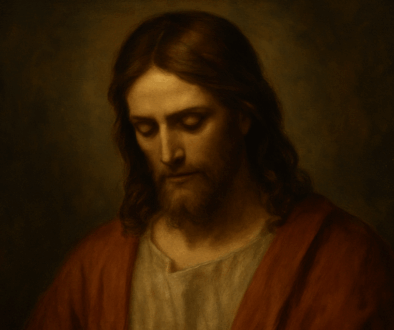
Christ doesn’t ask for surface improvements. He calls for inner rebirth. Not a polished fig leaf, but the naked return to the ground of our being. It is no accident He speaks of building on rock—not better habits, not better opinions, but on something we did not make and cannot fake.
Another thought: perhaps it isn’t simply a matter of rock versus sand. More often, it’s a journey—a slow and painful transition. We all begin by building on sand. It’s what we know. The rock lies buried, forgotten, or never known at all. So we build where it seems easiest, safest, most familiar.
But the storm comes—not to destroy us, but to awaken us. The structures we built begin to crumble. The identity we clung to fractures. And this too is grace.
We must let it fall. And then we must dig.
This is where Jesus, Jung, and Kierkegaard shake hands—at the edge of the ego (or false self), where the soul descends into truth and emerges changed.
8. Practising the Descent
Here are some ways to dig:
- Storm meditation — Visualise the house in the storm. Feel where in your body the wind blows hardest.
- Somatic sitting — Let your body speak. Notice the shifts, the sinking, the tightness, the ground.
- Shadow journaling — Use the ABC model (Activating event, Beliefs, Consequences) as a tool to uncover the hidden foundation.
- Breath-prayer — Inhale: “Into the depths.” Exhale: “Find the rock.”
9. The House That Stands
Don’t rush to rebuild. Don’t decorate the surface. Don’t call the sand solid.
Dig.
Descend into the ache, the dread, the memory you’ve avoided. Sit until the panic fades. Sit longer, until something answers from below—not in words, but in stillness.
And when the rain falls, and the floods come, and the winds rise—you will not fall.
Bible Commentry References
- C. H. Spurgeon, Metropolitan Tabernacle Pulpit, Sermon 2081 (1889).
- A. B. Bruce, The Expositor’s Greek Testament, Vol. 1 (1897), on Matthew 7:24–27.
- David Guzik, “Matthew 7 Commentary,” Enduring Word, accessed June 2025.
- HELPS Word-Studies, entry 4073 πέτρα.
- Joseph Benson, Benson’s Commentary on the Old and New Testaments, on Matthew 7:24–27.