Going Deeper: Jesus, the Well, and the Waters of Integration
What if the parts of you you’ve tried to hide—the shame, the patterns, the weariness—were exactly where grace wanted to meet you? In this post, we journey into one of the most intimate encounters in the Gospels: Jesus and the woman at the well.
“No one who drinks the water I give will ever be thirsty again.” — John 4:14 (CEV)
But instead of reading it as a moral lesson or historical moment, we’ll explore it as a living invitation to inner healing—through depth psychology, trauma wisdom, and the symbolic language of the soul.
“To confront a person with their shadow is to show them their light.” — C.G. Jung
1 · A Necessary Detour
Most Jews in Jesus’ day avoided Samaria. Too risky. Too impure. Too… other.
But we are told:
“He had to go through Samaria.” — John 4:4 (CEV)
Not because there were no other roads—but because he was following a deeper map. Inner work always leads us through Samaria: the places in our psyche we’ve exiled, buried, or avoided.
Shame. Old stories. That repeating pattern you can’t seem to break.
Jesus doesn’t bypass it. He enters it on purpose.
Shadow Prompt:
Where is your Samaria—the wound, story, or cycle you’ve spent years walking around?
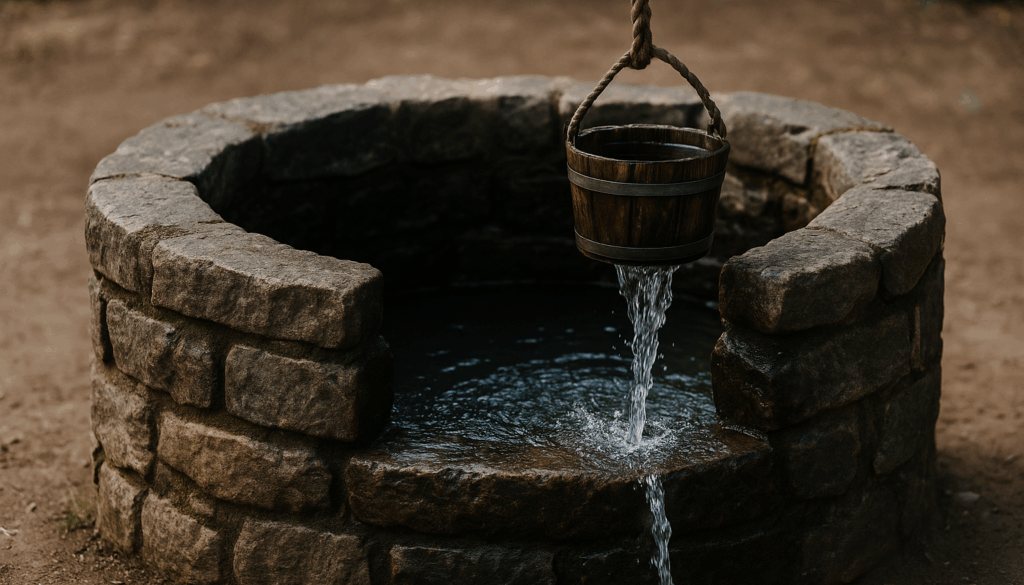
The scene unfolds at a well—but in mythic language, this is no ordinary well. It’s a portal. A threshold. A place where truth is drawn from hidden depths.
In dreams and stories, the well is the soul’s deep chamber—the quiet place where heaven and earth, ego and Self, meet. It is the ancient image of descent, initiation, and transformation. And today, someone is about to be reconnected with her own living spring.
Midday Heat & Inside-Tired
It’s noon. The sun is punishing. No one draws water at this hour—except for her.
She comes alone, again. Tired on the inside. Managing her shame in secret.
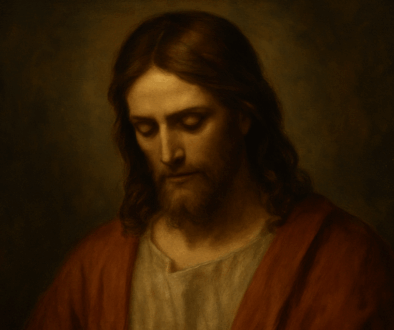
Jesus is already there, sitting at the well. Weary. Dust-covered. Thirsty. Human.
He looks up and says:
“Will you give me a drink?” — John 4:7
No sermon. No command. Just a small, disarming request.
This is how healing begins: not with control, but with invitation.
Not with power, but with presence.
The divine asking you to participate.
3 · The Triple Boundary Violation
Everything about this encounter breaks the rules.
The Samaritan woman said to him, “You are a Jew and I am a Samaritan woman. How can you ask me for a drink?” —John 4:9 (NIV)
- A rabbi speaking with a disgraced commoner.
- A Jew initiating with a Samaritan.
- A man, alone with a woman, in public.
Jesus violates cultural, religious, and gender boundaries in a single conversation—because grace doesn’t ask permission to cross the lines we’ve drawn to protect our shame.
Healing doesn’t happen in safe categories. It happens in radical presence.
4 · He Came Without a Bucket
Jesus arrives thirsty.
And He brings no bucket.
““Sir,” the woman said, “you have nothing to draw with and the well is deep.” — John 4:11
Not because He forgot—but because she must do the drawing.
She brings the jar.
She approaches the well.
She engages the symbol.
She must lower the vessel into her own depths.
Healing does not happen to us. It happens through us.
He doesn’t coerce. He doesn’t climb in. He doesn’t draw it for her.
He waits.
Because true transformation requires her own hands to reach for the spring inside.
5 · Trauma, Repetition & the “Five Husbands”
Their conversation deepens.
“Where can you get this living water?” John 4:11 (NIV)
In depth psychology, “living water” is what flows when the blocks come down—when the dam of shame breaks and vitality returns. This isn’t religion. It’s renewal.
And then he says it:
“Go, call your husband.” —John 4:16
He names the wound without accusation.
Five husbands. A sixth situation. A story full of ache.
This isn’t about sin—it’s about pattern.
“We adapt, we cope, we survive—but often in ways that keep us thirsty for the very things we didn’t receive.” — Gabor Mate, The Myth of Normal
The nervous system keeps reaching for something it never got.
Love. Belonging. Safety.
But Jesus doesn’t flinch. He doesn’t shame. He reflects.
And something in her dares to stay in the light.
Exposure without rejection—that’s the turning point in any soul’s healing.
6 · Internal Cast: A Soul in Parts
This woman isn’t just one person—she’s a whole system of inner voices.
Using the Internal Family Systems (IFS) lens:
- Managers schedule her water run at off-hours. They control perception.
- Exiles carry the shame of serial rejection.
- Firefighters step in with theology:
“Our ancestors worshiped on this mountain, but you Jews say Jerusalem…”
She wants to escape into debate.
But Jesus doesn’t argue.
He stays grounded, and redirects her back inward:
“A time is coming when you will worship the Father neither on this mountain nor in Jerusalem, but in spirit and in truth.” — John 4:23 (NIV)
Worship won’t live in locations or systems anymore. It will live in the honest, awakened self.
The real temple is your inner world—when all your parts are welcome to sing.
7 · Shame, Completion & the Seventh Man
She’s had six men.
Six dry wells. Six incomplete stories.
And now—the seventh.
In the Bible, seven means wholeness. Completion. Sabbath.
Jesus is not another man in the pattern. He is the break in the pattern.
The one who doesn’t take her body, or use her story—
but gives her back to herself.
He says simply:
“I, the one speaking to you—I am he.” — John 4:26
And she drops the jar.
The very tool of her survival becomes obsolete.
The spring is no longer out there—it’s within.
In fairy tales, the well is where heroines descend to retrieve soul-truth. In this story, she doesn’t fall in—she rises up.
The water has moved from there to here. The Source is now within. She no longer needs the tool to draw it.
A well is not just a place to drink—it’s where the soul bends low, waits, listens, and is given back to itself.
8 · The Drop and the Ripple
She runs back into town. But she no longer hides.
“Come see a man who told me everything I ever did!” — John 4:29
The line that once brought shame is now her message.
Her past isn’t erased. It’s integrated. Transformed. Reclaimed.
The shadow becomes the doorway.
The exile becomes the evangelist.
The healing overflows into others.
9 · Integration Means Returning Differently
The woman doesn’t ascend into the clouds. She returns to town. But she is not the same.
This is how real transformation looks:
Not a glowing aura or instant perfection, but a shift in center of gravity.
What was once hidden is now spoken.
What once defined her is now a doorway.
She becomes a vessel—not just of water, but of living witness.
Integration means the story stays, but the shame doesn’t.
You return to the same places—but with different eyes, a different center, a different well inside.
10 · Final Reflections
You don’t have to climb a holy mountain.
You don’t have to get the bucket right.
You don’t have to clean up the past before approaching the well.
Jesus sits where you’ve collapsed.
He waits where you’ve hidden.
He asks for a drink not because He needs it—
but because He knows you do.
He crosses every line to reach the part of you you’ve pushed furthest away.
And He speaks not to condemn, but to awaken.
The spring is already in you.
Let the jar fall.
Let the water rise.
You are no longer the woman avoiding the crowd.
You are the well.
And the water is rising.